Poker Hand History Insights Drive Tailored Bonus Customization in Mobile Applications
Written by Noah Butler · Oct 29, 2026

Poker Hand History Insights Drive Tailored Bonus Customization in Mobile Applications
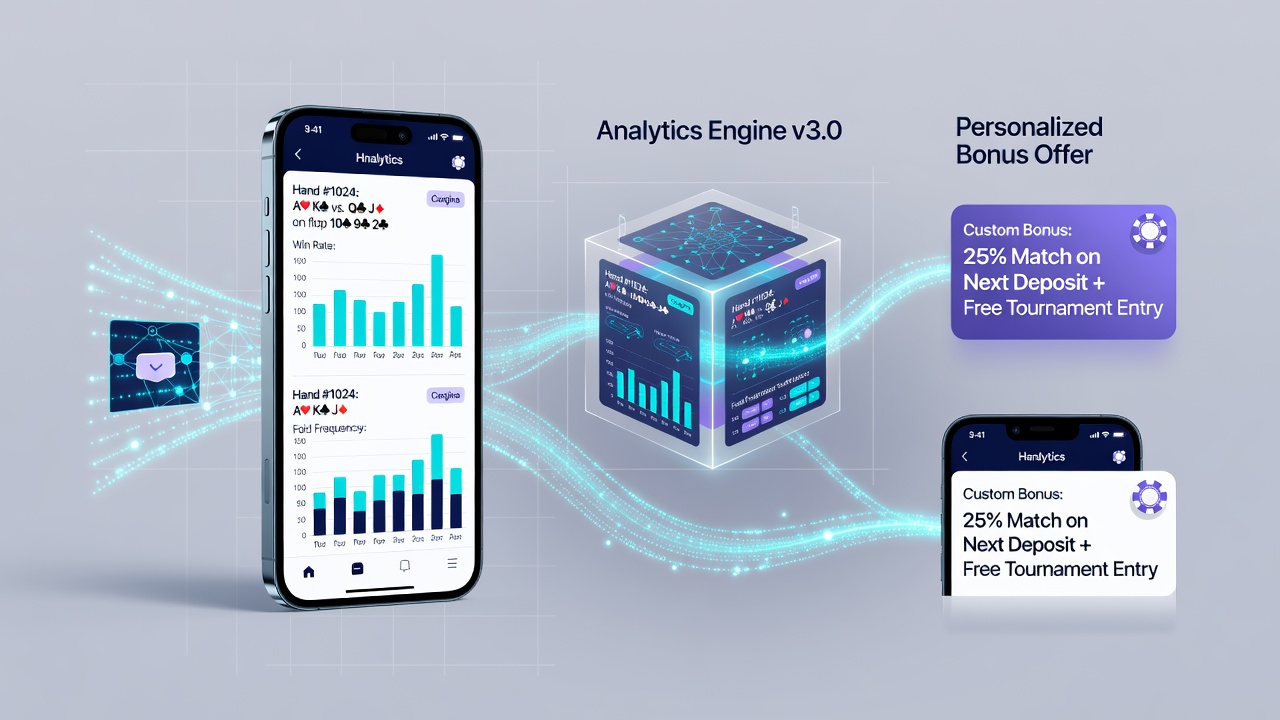
Developers in the mobile gaming sector connect detailed poker hand history records with bonus offer engines to create individualized promotions that align with observed player patterns and session behaviors. Hand histories capture metrics such as pre-flop raise frequencies, post-flop aggression factors, and showdown win rates, which platforms process through algorithms to segment users into categories like tight-aggressive or loose-passive styles, and these segments then trigger specific bonus structures including deposit matches scaled to volume or free tournament entries based on consistency scores.
Data Collection and Processing Pipelines
Mobile applications log every action during hands played across cash games and tournaments, storing variables including position, stack depth, and opponent tendencies in secure databases that comply with regional data protection standards. Analysts apply clustering techniques to group players by style metrics, while real-time processing layers update profiles after each session so that bonus engines can respond within minutes of activity completion. Research from industry reports indicates that platforms integrating these pipelines see measurable shifts in retention when offers match demonstrated playing tendencies rather than applying uniform rewards across all users.
Matching Analytics Outputs to Bonus Mechanics
Once hand history data identifies a player's preferred game types and risk tolerance levels, systems map those profiles to bonus parameters such as wager multipliers on rakeback deals or entry fee waivers for sit-and-go events. Observers note that tight players often receive reload bonuses tied to hourly volume targets, whereas aggressive styles receive cashback offers that scale with variance exposure during high-stakes sessions. This linkage allows operators to adjust promotional parameters dynamically as new hands accumulate, maintaining relevance without manual intervention from marketing teams.
Platforms further refine matches by incorporating external session data such as device type and time-of-day patterns, which combine with hand metrics to generate composite scores that prioritize certain offer types. Figures from mobile analytics providers reveal that users receiving style-matched bonuses complete required playthrough conditions at higher rates compared with generic promotions distributed without hand history input.
Implementation Across October 2026 Mobile Ecosystems
During October 2026 several major operators expanded these integrated systems to cover multi-state jurisdictions, synchronizing hand data streams from both regulated and offshore-facing applications. The approach relies on API connections between poker engines and bonus servers that push updates whenever a player's aggression factor crosses predefined thresholds, automatically swapping an ongoing freerolls offer for a cashback structure better suited to emerging tendencies. Regulatory filings from bodies including the Nevada Gaming Control Board document increased scrutiny of these personalization methods to ensure transparency in how historical data influences promotional eligibility.
Case examples from operators show that players with documented high fold-to-3-bet rates receive targeted satellite ticket bundles, while those logging frequent multi-way pots see deposit bonuses capped at lower thresholds to encourage continued volume. These adjustments occur through rule-based engines that reference stored hand histories spanning multiple weeks, allowing offers to evolve alongside documented skill progression or style shifts.
Technical Considerations and Compliance Factors
Engineers building these linkages must address latency issues when querying large hand history repositories during active sessions, often employing edge caching to deliver bonus suggestions without interrupting gameplay. Data from academic studies on player modeling, such as those published through institutions tracking behavioral analytics, demonstrate that accurate segmentation requires minimum hand sample sizes before reliable style classification occurs, preventing premature offer assignments based on limited data. Compliance teams review audit trails of how hand metrics translate into bonus parameters to meet requirements set by authorities in multiple regions including the New Jersey Division of Gaming Enforcement and the Australian Communications and Media Authority.
Security protocols encrypt hand history transfers between client applications and central servers, while anonymization techniques strip personally identifiable information before analytics teams access aggregated datasets for model training. This framework supports ongoing refinement of personalization rules without exposing raw player records beyond necessary operational boundaries.
Future Developments in Linked Systems
Industry observers track experiments where machine learning models predict future hand history trends from current data, enabling proactive bonus offers that anticipate style changes before they fully manifest in logged sessions. These predictive layers integrate with existing segmentation tools to extend offer validity periods for players whose metrics suggest sustained engagement patterns. Reports from the European Gaming and Betting Association highlight continued investment in such capabilities across mobile platforms operating in multiple markets.
Operators continue to test variations in how hand history depth influences bonus granularity, comparing outcomes from systems that weight recent hands more heavily against those treating entire career records equally. The resulting insights feed back into algorithm updates that maintain alignment between observed play and promotional structures.
Conclusion
Linking poker hand history analytics with customized bonus personalization creates structured pathways for operators to align promotional content with documented user behaviors in mobile environments. The process depends on accurate data pipelines, rule-based matching engines, and compliance oversight that together enable dynamic offer adjustments as player profiles evolve through continued play. As these systems mature, they provide measurable frameworks for connecting session metrics directly to reward mechanisms across expanding mobile ecosystems.